Cookstoves
Using efficient cooking stoves instead of the traditional "3-stone fire" drastically reduces the amount of firewood needed for cooking, allowing families to cook easily, cleanly, and more cost-effectively. Children and women are mainly responsible for the time-consuming collection of firewood. Children can use the time gained for their education and women for other activities.
The reduced flue gases also improve the air in the homes of the local population and reduce respiratory diseases. It is very important to handle the cooking stoves correctly when cooking. For example, it is better to use small and dry branches instead of large and fresh branches. Local employees help and support the proud owners of the new cooking stoves.
Ibanda-Makera Project (Gold Standard)
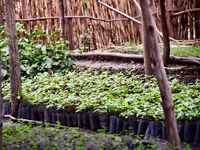
Natural forests have become rare in Rwanda, one of which is the approximately 170-hectare Ibanda-Makera Forest. Ibanda is a forest savannah in the east of the region, Makera is a gallery forest in the southwest with a papyrus swamp in the south that extends to the Akagera River. Around 70,000 efficient cooking stoves have been distributed in this area and over 110,000 trees have been planted as an additional activity.
One challenge in protecting natural forests is recognizing a precise boundary to arable land. In Ibanda-Makera, all participants were invited to participate in this process. To highlight the boundary and create a buffer zone, the native pencil tree (Euphorbia tirucalli) was planted as a living fence between the farmland and the forest. For the first time, a boundary has been recognized by the entire community: a milestone for the preservation of this unique ecosystem.
 < 10.000 VERs available | 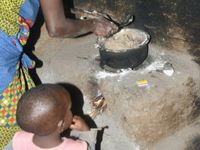 Vintage 2023/2024 | 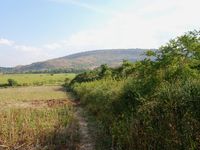 |
Gishwati-Mukura Project (Gold Standard)
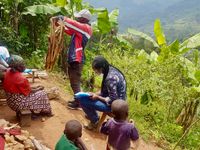
In 2016, the "Gishwati-Mukura National Park" was founded. In 1960, 28,000 hectares were covered with forest. In several phases, Gishwati was almost completely cut down, and in 2009 only 600 ha remained. Numerous initiatives led to the creation of a new national park and now around 1,500 hectares are forested again. Numerous animal and plant species are unique to this region, such as the Golden Monkey. Some chimpanzees are also at home here.
In the next few years, the forest area is expected to increase steadily and one day hopefully a forest corridor from Gishwati via Mukura to the Nyungwe rainforest in the south will be created. This cookstove project with over 80,000 locally manufactured stoves is an essential building block for realizing this vision.
 < 10.000 VERs available |  Vintage 2023/2024 | 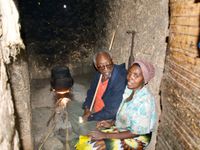 |